Pushpesh Pant’s Paneer

Makes: 750gm

I’m not sure Pushpesh is behind paneer, though this two ingredient recipe is in his book and every time we cook Indian (which is all the time), Nat asks me to pull down his book which proudly states – in print – that is is 1.5kg.

So this is more a reference for Nat who makes paneer for so much of the Indian cooking we do.

All I can say is that freshly made paneer is so superior to store bought that it’s only an emergency when we… store bought.

Here you go babe. Never stop.

Ingredients

2 ltr whole milk
2 tbsp lemon juice

Method

  1. Heat the milk in a pan over a medium heat. When boiling, add the lemon juice.
  2. As the milk curdles the whey will separate. Strained the curdled milk through a piece of clean muslin, catching all the solids. Bring up and tie the edges of the muslin to form a pouch around the solids. Do not squeeze the muslin.
  3. Hang the pouch over a container and leave until all the water has been drained. Transfer the solids, still covered with the muslin, to the sink and weigh down for 2 – 3 hours to produce a block of paneer that can be cut to the desired shape.

Sabita Radhakrishna’s Beef Fry (Erachi Olathathiathu)

Serves: 4

We had our second trip to India a few months ago and our first destination was Fort Kochi, a historic, coastal neighbourhood of wider Cochin, Kerala.

Portuguese, Dutch and British influences: gorgeous streets with churches incredible buildings dating back almost 500 years.

We staying in a Portuguese house built in 1600!
Fort Kochi at night.

We visited the incredible Jew Street – a quarter settled in the 1500s – by Cochin Jews: wonderful arts, antiques and book stores And among other things, we picked up the cook book ‘Paachakam – Heritage of Cuisine of Kerala’.

What we loved were the chapters dedicated to the different cooking styles and influences: The Syrian Christians, the Cochin Jews, the Nairs.

Interesting Kerala is one of the few states in India where beef is consumed: this isn’t a recipe you would find anywhere near Delhi!

And wow do they love their ‘frys’ in Kerala: fish, prawn, pork, lamb and beef. (And coconut: it is Kerala after all.)

Which is why the first dish we cooked from this book was a beef fry.

Sounds underwhelming, though it isn’t. Quite the opposite – incorporating vinegar – another European influence that seeps into so much of the food.

This beef fry is just joy. It completely hits the spot: robust yet subtle, spicy yet tamed by the coconut.

The fry comes at the end with the tempering and wow doesn’t the whole dish take a turn and complete itself.

Nat absolutely loved this. Even Maxy (8) thought it was wonderful as he drank a quart of milk.

Kerala was a uniquely beautiful place and we were lucky enough to do much of it including the backwaters.

Though Jew Street was such a highlight. We even visited twice.

I can’t wait to get further into this book.

Ingredients

Spice Paste

10 curry leaves
2 whole cloves
1 2.5cm piece of cinnamon
1 green cardamom pod
1 tsp chilli powder
3/4 tsp coriander powder
1/2 tsp ground turmeric powder
1/2 tsp peppercorns
1/2 tsp cumin seeds
1/2 tsp aniseed

Meat

500gm mutton, pork or beef cut into 3cm cubes
1 1/2 tsp salt, or to taste
4 c hot water
1/2 c coconut slivers
1 tsp vinegar (red or white)

Tempering

2 tbsp coconut oil
1 tsp mustard seeds
3/4 c shallot, sliced into thin long strips
1 tsp fresh ginger, peeled and julienned
6 garlic cloves, sliced

Method

  1. To make the spice paste: in a blender or food processor, combine the spice paste ingredients. Grind into a paste.
  2. To make the meat: season the meat with salt. In a large pot over high heat, cook the meat, adding the hot water and spice paste. Bring to a boil, lower the heat and cook for 45 minutes to an hour, until tender, adding more water as necessary. Cook down.
  3. Add the coconut slivers. Cook for 7 minutes more and stir in the vinegar.
  4. To make the tempering: in another large skillet over medium heat, heat the coconut oil. Add the mustard seeds, shallot,, ginger and garlic and cook until the mustard seeds begin to crackle and the shallots turn pale brown.
  5. Add the meat mixture to the tempering and sauté to brown the meat and dry fry. If you would like gravy, add a little more hot water and cook until it blends with the masala and meat.

Jennifer Segal’s Slow Roasted Salmon (Ocean Trout) with French Herb Salsa

Serves: 6

I hate to admit it – and rarely do – though there are go-tos I have when the cooking pressure is on and we have guests for lunch. (Generally speaking we don’t cook many dishes twice.)

This is one of them.

It’s a winner on every level.

It is simple.

It looks incredible: looks that betray its simplicity. Think elegant, yet rustic: provincial.

And predictably: it tastes awesome.

As a starter. As a side. With a salad. With baby potatoes. With dressed-up fries.

Really anyway you can serve it, it’s genius.

There is a reason I’ve plated this half a dozen times at least.

(Which is all I am admitting to!)

Ingredients

1kg salmon (I use ocean trout) filet with skin, pin boned
1 tbsp extra virgin olive oil
3/4 tsp sea salt flakes

French Herb Salsa

3 tbsp finely diced shallot
3 tbsp white wine vinegar
2 tbsp finely chopped Italian parsley
1 tbsp finely chopped chervil
1 tbsp finely chopped chives
1 tbsp finely chopped basil
1 tsp finely chopped tarragon
5 tbsp extra virgin olive oil
1/4 tsp sea salt flakes
Freshly ground pepper

Method

  1. Preheat the oven to 105c.
  2. Place the salmon on a baking sheet. Drizzle with olive oil and sprinkle the salt evenly over the top. Place in the oven and roast for 40 – 50 minutes, until the fish begins to flake in the thickest part of the filet.
  3. For the salsa, combine the shallot and vinegar for 15 minutes. In a separate bowl combine the herbs, olive oil, salt and a few grinds of pepper.
  4. Flake the salmon into large rustic chunks (on the skin); combine the herb mixture with the shallot mixture, testing the amount of vinegar you need.
  5. Dress over the fish and serve warm.

Thomas Straker’s Dulce de Leche Ice Cream

Makes 10 – 15 scoops

Ice cream – at least as far as I knew – was about making custards, then combining with more creams and flavours.

So could this one work?

When I was a kid, I would put milk and Strawberry Nesquik into my parents’ ice cream maker and sure it was yummy, though frozen (icy) milk does not make ice cream.

Anyway, short of time and having promised ice cream for a lunch, I chose this Thomas Straker recipe: and hot damn: it’s awesome.

And so so easy.

Dulce de Leche (caramel) can be found at most supermarkets. So now there is no excuse.

Ingredients

500ml whole milk
400gm dulce de leche
124ml double cream

Method

  1. Put the milk and dulce de leche in a saucepan and set over a medium heat. Stir constantly until the dulce de leche has totally melted. Set aside to cool.
  2. Once cooled, whisk in the double cream., then transfer to an ice cream machine and churn according to the manufacturers’s instructions. Store in the freezer.

Thomas Straker’s Roast Chicken, Butter Bean & Salsa Verde

Serves: 4

Thomas Straker is our sort of chef.

He takes a theme and dials it up to 11: excessive use of butter; the demand that you make your own stock; pure comfort. Effort that delivers real culinary return.

Foams and tweezers Thomas Straker does not do. Think ragu or burnt butter instead.

His famous chicken leek and bacon pie is just extraordinary. This gnocchi is outrageous.

And this roast chicken from his book ‘Food You Want to Eat’ is just wonderful: a brilliantly warming and absolutely smile-earning dish perfect for a late summer lunch.

Nat and I have been on a roast chicken tear of late. It’s become a go-to Sunday lunch favourite: open a Champagne, set the kids up for the afternoon; enjoy a few hours together, with a guarantee of great chicken sandwiches for the next few days at work.

This recipe dials it up a whole new level: it looks the part, tastes the part and is the part. The salsa verde just tops it off: flavour sensation and completes the part.

Add a salad of leaves and a bottle of cold white or a chilled Pinot and this is what I am talking about.

Ingredients

For the butter beans

250gm dried butter beans (or use 500gm of canned beans)
50ml extra virgin olive oil, plus more to finish
2 shallots, finely chopped
2 garlic cloves, crushed
1 tbsp tomato purée
Chilli flakes
Fine sea salt

For the chicken

1 large, whole (free range) chicken – 1.8kg
1/2 shallot
1/2 unwaxed lemon
1/2 small bunch of thyme
3 garlic cloves, unpeeled and bashed with the side of a blade
100ml olive oil
400gm cherry tomatoes

Salsa Verde

60gm parsley leaves
30gm mint leaves
30gm basil leaves
1 garlic clove, finely grated
1 tbsp capers, drained
1 tbsp Dijon mustard
Finely grated zest and juice of 1 unwaxed lemon
120ml extra virgin olive oil, plus more to seal
Sea salt flakes

Method

Salsa Verde

  1. Start with the salsa verde: put the picked herbs in a food processor with the garlic and capers and pulse-blend until roughly chopped. Add the mustard, lemon zest and juice, olive oil and a pinch of salt, then blend again until combined but still slightly coarse in texture.
  2. Season with more salt if needed: will store for a week in the fridge covered with a little more olive oil to seal.

Chicken

  1. If using dried beans, soak in a large bowl of water overnight. The next day, drain them and tip into a saucepan with fresh water.Place over a high heat and bring to the boil., reduce the heat, simmer gently until soft, then drain. Whether using dried or ready-cooked beans, season with salt and add the olive oil.
  2. Take the chicken out of the fridge at least 1 hour before you cook it. Remove the wishbone: lift the skin at the front of the breast and insert a thin, sharp knife around both sides of the wishbone to help pull it out. Replace the flap of skin and tuck it into the cavity. Put the shallot, lemon, thyme and garlic cloves in the cavity.
  3. Preheat the oven to 250c/230c fan or its highest setting. Rub the chicken with olive oil and sprinkle generously all over the skin with fine salt. Place in a large roasting tin in the middle of the oven and roast for 20 – 25 minutes until well coloured, basting after 10 minutes.
  4. Reduce the oven to 120c/100c fan, add the cherry tomatoes to the tin and return to the oven for a further 20 – 25 minutes, until the juices run clear when the bird is pierced at the thickest part of the thigh with a sharp knife. If you have a temperature probe, the breast should reach about 60c. Remove from the oven and rest for 20 minutes.
  5. To finish the beans, place a large saucepan over a medium heat with a glug of olive oil. Add the shallots and a generous pinch of salt and cook for 3 -4 minutes until soft, then add the garlic for a further minute. Add the tomato purée an cook out for 2 minutes then add a good pinch of chilli flakes. Pour in the cherry tomatoes, beans and the resting juices from the chicken with salt to taste.
  6. Carve the chicken first removing the whole breasts and then the legs, splitting them into thigh and drumstick portions. Serve on a large warmed platter, with the butter beans and salsa verde.
  7. (And leaves, Pinot and the kids asleep.)

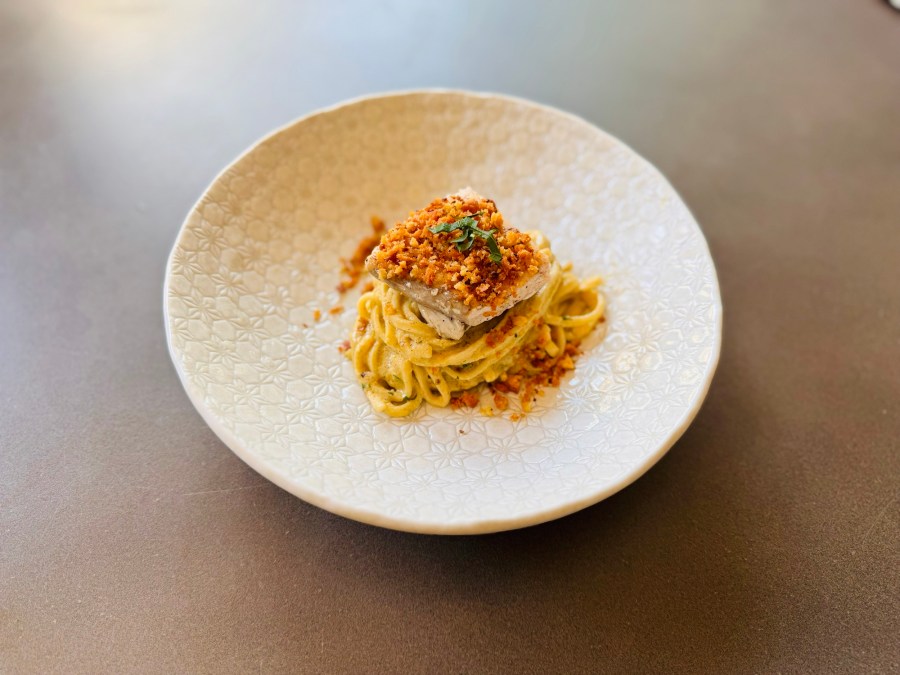
Paul Ainsworth’s Cornish Cod Loin with Spaghetti, Wild Garlic Pesto, Crispy Pancetta and Pangrattato

Serves: 4

It’s been a while since my last post, though this one is worth it. (We’ve been super busy with work and also travel – India and Fiji for four and a half weeks!).

Nat first cooked this pasta as part of a pasta-cook-off during Covid.

Judged by Nat’s sister Court and husband Greg, I was confident my pasta – Gordon Ramsay’s Lobster Ravioli with Lemongrass Veloute – was a shoe-in.

I almost felt sorry for Nat.

White fish piece perched on top of spaghetti. I of course urged her on, preparing myself for the accolades and retention of my crown in the kitchen.

It didn’t go to plan.

Court and Greg looked at each other and then me. We knew.

My abdication had in fact occurred years prior, though like that 46-year old guy still partying at Ibiza, I thought my old moves might reconquer. (46-year old RobbyDog should know by now he is on the wrong side of the slope.)

My pasta was excellent. A fine dining Gordon Ramsay recipe from his book ‘3 Star Chef’.

The only problem being the book was written in the 90s. (About the time I should have been in Ibiza).

I was bringing a 24 year old dish to a knife fight.

Nat’s dish – this pasta – was just so youthful in comparison. Subtle, fun, real 1-hat if not 2-hat cooking. It is sublime.

Nat can’t cook omelettes (something Gordon Ramsay uses as his baseline test of cooking) so maybe there is hope.

Truth is, I know Nat can cook omelettes. She is just humouring me.

(Nat just cooked this for a second time for a late Sunday lunch and wow – it’s still a complete winner!)

Ingredients

Cod Loin

600gm cod loin, cut into 4 equal portions
400gm of spaghetti
100gm of pancetta
200ml of fish stock (or vegetable stock)
60gm of pine nuts, toasted
1 lemon, juiced
100gm of crème fraîche
20gm of basil, chopped
20gm of parsley, chopped
20gm of wild garlic, chopped
50gm of butter, plus extra for greasing
25ml of vegetable oil

Wild Garlic Pesto

30gm of basil
30gm of wild garlic
100gm of pine nuts, toasted
10ml of lemon juice
30gm of Parmesan, grated
100ml of olive oil
Salt, to taste

Pangrattato

250gm of sourdough bread, broken into pieces
4 garlic cloves, finely grated
20gm of thyme leaves
1 lemon, zested
Salt, to taste
50gm of butter

Method

  1. To begin, make the pesto. Place the basil, garlic and pine nuts in a pestle, grind to a coarse paste then gradually grind in the rest of the ingredients until you reach a pesto consistency.
  2. To make the pangrattato, add all of the ingredients to a food processor and blitz until broken into fine breadcrumbs.
  3. Place a pan over a medium heat, add the butter and once foaming, add the breadcrumb mixture. Roast until the breadcrumbs are golden brown and have a nice crunch. Place on a tray and set aside.
  4. Preheat the oven to 180c.
  5. Place a large pan of salted water over a high heat and bring to the boil.
  6. When ready to cook, lightly season the cod loin and place on a buttered baking tray. Bake for 10 – 12 minutes, then remove from the oven and allow to rest in a warm place.**
  7. Cook the pasta. Meanwhile, add the vegetable oil to a heavy based pan and fry the pancetta until crispy and brown. Add the butter for an extra crisp finish, then deglaze with the stock. Allow to reduce slightly, then add 300gm of the pesto, the pine nuts, lemon juice and crème fraîche.
  8. Add the fresh herbs to the sauce. Drain the spaghetti, tip into the sauce and stir until everything is well coated.
  9. To serve, divide the spaghetti between plates and top with the baked cod. Add an even layer of pangrattato to the cod.

* You can’t really buy this in Australia. It’s widely regarded as a weed and banned in some States. Substitute garlic.

** Nat pan fried with a fish weight to get the skin super crispy.

Dan Toomb’s Pork Keema Vindaloo

Serves: 8

Wait!

Before you dismiss this as another pork vindaloo – something I’ve previously typed up – it isn’t.

For starters, it’s pork mince.

(And that is a win in itself.)

Secondly, this spicy mince is going in a buttery roti with hot sauce and shredded cheese as a late Saturday, tequila (or whatever you prefer) shot hit-the-spot dinner.

Turn the lights down, turn the music up and dance in the kitchen sort of food that’s going to get you well past midnight.

A few years back, I thought of creating a category on this blog called “Saturday Night Drunk” to hoover up all the late night recipes you should plan for a great Saturday night in. (Pro tip: try this homemade kebab or Matt Preston’s “Cheat’s Lamb Pide” or this amazing thin-crust Pide with Lamb Topping (Lahmacun).

I didn’t (rightly or wrongly) add the category to my blog though if I had, I’d pin this pork vindaloo to the top.

Nuts good. Just add tequila and music. Another faultless Dan Toombs Indian.

Ingredients

For the marinade

1 tsp chilli powder
1 1/2 tbsp ground cumin
1 1/2 tbsp ground coriander
1/2 tsp ground fenugreek
1/2 tsp ground cloves
1 tbsp ground black pepper
1/2 tsp ground turmeric
3/4 tsp ground cinnamon
1/2 tsp ground cardamom
4 green chillies, finely chopped
5 tbsp red wine vinegar
2 tbsp soft brown sugar
1 tbsp tamarind concentrate
7 garlic cloves, smashed
2.5cm piece of ginger, chopped

For the curry

800gm pork mince
3 tbsp coconut oil
1 tsp brown mustard seeds
10 fresh curry leaves
2 onions, finely chopped
2 tomatoes, finely chopped
2 bay leaves
Salt
Juice of one lime
Rotis, hot sauce and shredded cheese to wrap it all up

Ingredients

  1. Place all the marinade ingredients in a blender and and blend to a paste.
  2. Using your hands, mix the marinade with the meat and refrigerate for 30 minutes or ideally, overnight.
  3. When ready to cook, heat the oil over a high heat in a heavy pan. When visibly hot, add the mustard seeds and when they begin to pop, stir in the curry leaves and fry for about 30 seconds until fragrant.
  4. Stir in the chopped onion and fry until soft and translucent.
  5. Then add the chopped tomatoes and the marinated meat (with all the marinade). Brown the meat, stirring regularly until it is all cooked through. Cook until all of the liquid has been reduced.
  6. Check for seasoning and add salt to taste: and the lime juice.
  7. Serve on top of hot rotis (chapattis): add grated cheese and hot sauce and thank me later.

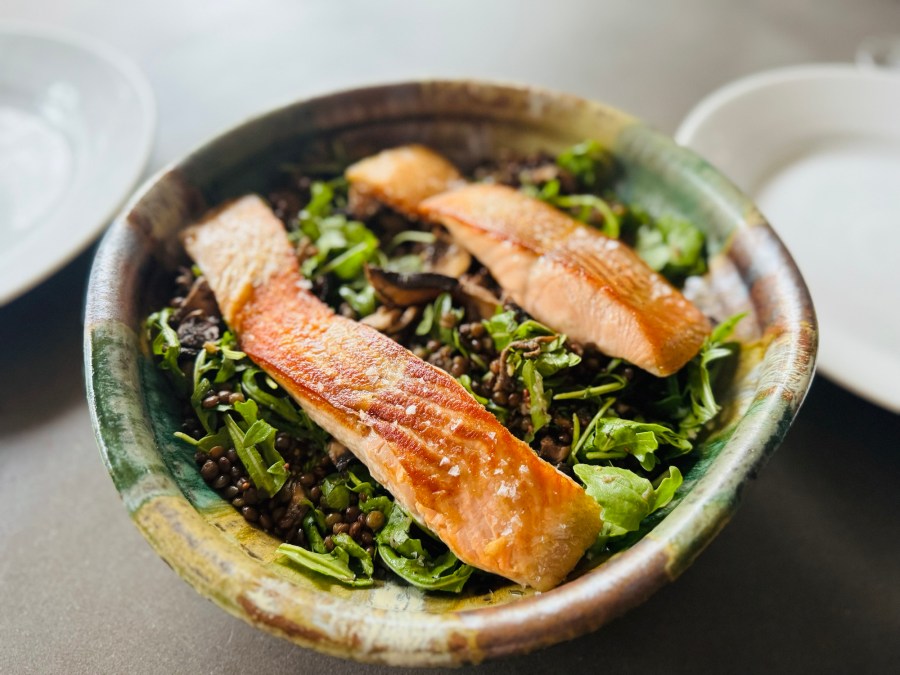
Gordon Ramsay’s Grilled Salmon with Garlic Mushroom and Lentil Salad

Serves: 4

This blog has never been about anything but obtainability and this recipe is proof of that.

Nat offered a late mid-week lunch (with a Champagne) if I crunched a tonne of work in the morning (and then again post-lunch) and who was I disagree with the offer to good to refuse.

I initially thought I was up to cook, so headed straight to Gourmet Traveller: I am after all a kid of the 80s.

Nat of course headed straight to Gordon: she’s a kid from the less cooler 90s.

Though turns out I’m the less cooler one.

This is just such a bloody wonderful, obtainable, sorry not-sorry, simple dish.

It well crosses the line of effort and sophistication to smash the boring Chef’s salads I so often serve up on a Saturday after kids’ sport and shopping.

One hat, no. You won, yes.

(And yes: don’t eat farmed salmon. Wild caught salmon is out there and your kids will thank you for it.)

Ingredients

200gm Puy lentils
1 bay leaf
2 thyme sprigs
800ml vegetable stock
1 tbsp olive oil
200gm chestnuts mushrooms, cut into eights
200gm Portobello mushrooms, sliced
2 garlic cloves, peeled and finely chopped
4 x 100gm wild salmon fillets
100gm rocket leaves
Sea salt and freshly ground black pepper

For the dressing

1 garlic clove, peeled and crushed
2 tbsp white wine vinegar
1 tsp wholegrain mustard
1 tsp runny honey
1 tbsp extra virgin olive oil
1 tbsp water

Method

  1. Put the lentils into a saucepan along with the bay leaf, thyme and stock. Bring to the boil over a medium-high heat, then reduce to a simmer. Simmer for 15 – 20 minutes until tender.
  2. In the meantime, heat a large-based frypan over a medium-high heat and add the olive oil. Once hot, add the mushrooms with a pinch of salt and cook in the pan for 6 – 8 minutes stirring now and again, until soft and caramelised on the edges.
  3. Add the chopped garlic and continue to cook for 2 minutes, then remove from the heat.
  4. Once the lentils are tender, drain well and discard the herbs. Put the lentils into a large mixing bowl and add the mushrooms. Mix together gently to avoid breaking up the lentils too much.
  5. To make the dressing, put all the ingredients into a clean jar with a punch of salt and pepper. Close the jar, shake until the dressing comes together and emulsifies.
  6. Preheat the grill to high: grill the salmon for 6 – 8 minutes to your liking.
  7. Pout half the dressing over the warm lentils and toss gently to get everything coated. Fold in the rocket, place the salmon on top and pour over the remaining dressing. Serve immediately.

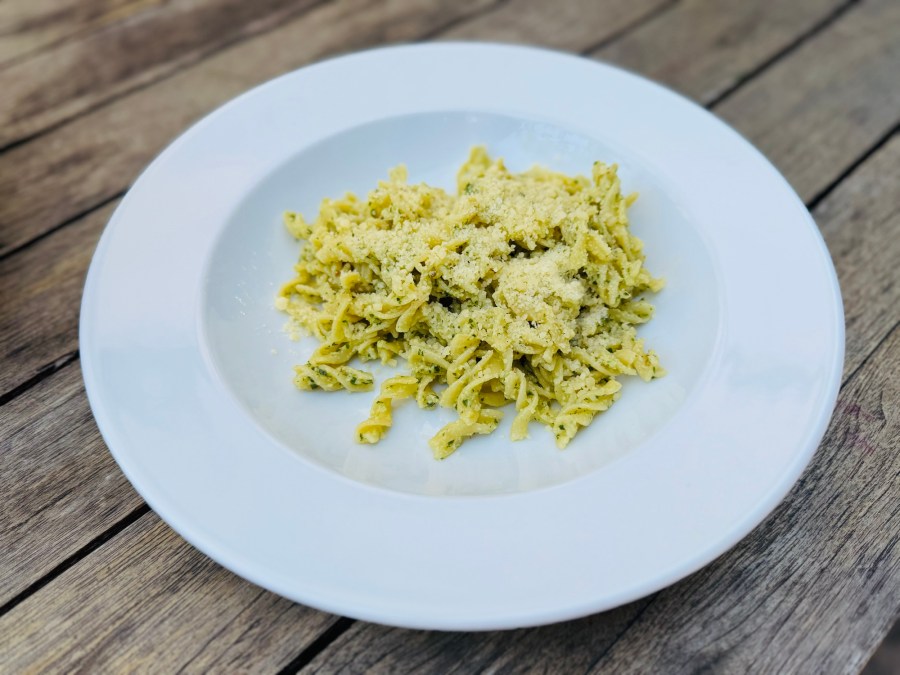
Jeanine Donofrio’s Basil Pesto Pasta

Serves: 1 cup/8

Traditional basil pesto is true comfort.

It’s simple. Moorish. Entirely satisfying.

There is nothing revolutionary in this recipe; it’s down the line.

Though in our search of the simplest – and greatest – pastas, I have no choice but to type it up.

As part of Nat’s search for the world’s best pasta, it’s not going to be a finalist.

Though that isn’t the point.

We all need a (growing) repitoir of simple pastas for a late Saturday lunch. Grab a few ingredients from the shops.

Even better, we have basil aplenty in our modest herb garden and we always have pine nuts and grated Parmesan in the fridge.

The point instead is that you can feed eight on a dime. And in a way that eyes will lock, people will smile, you did this on a whim and satisfaction levels are sky-high given the circumstances: dinner on a whim.

Ingredients

1/2 c toasted pine nuts
2 tbsp fresh lemon juice
1 garlic clove
1/2 tsp sea salt
Freshly ground black pepper
2 c basil leaves
1/4 c extra virgin olive oil
1/4 c fresh grated Parmesan cheese, plus extra to serve
Pasta, cooked al dente to serve

Method

  1. In a good processor, combine the toasted pine nuts, lemon juice, garlic, salt and pepper and pulse until well chopped.
  2. Add the basil and pulse until combined
  3. With the food processor running, drizzle in the olive oil and pulse until combined. Add the Parmesan cheese and pulse to briefly combine. For a smoother pesto, add more olive oil.
  4. Serve with al dente pasta, more Parmesan, open a red, sit back and smile.

Damien Pignolet’s Tiny Omelette of Goat’s Cheese & Pine Nuts

Serves: 1

Nat and I had a simple French lunch a Sunday or two ago and I cooked this omelette from Damien Pignolet’s book, ‘french’.

It’s a book I have had for years and it’s just lovely 80s and 90s French from his various restaurants. (If you haven’t, Bistro Moncur in Woollahra is a wonderful long lunch!)

This omelette is predictable delicate and just a lovely way to kick things off; I doubled it so that we had a small omelette each.

Enjoy.

Ingredients

1 whole egg
1 egg yolk
2 tsp crème fraîche
2 tsp pine nuts, toasted until pale golden
1/4 tsp thyme leaves
1 tsp unsalted butter
2 tsp rosemary oil (below)
1 tbsp rindless mature goat’s cheese, broken into small pieces

Method

  1. Place the egg, egg yolk, crème fraîche, and pine nuts in a small bowl for each omelette. Season with a tiny pinch of salt, freshly cracked black pepper and thyme leaves. Using a fork, break the eggs and yolks, lightly mixing the ingredients so that streaks of white and yolk are still visible – this ensures lightness of texture in the omelette.
  2. Heat the butter and rosemary oil in a blini pan, pour in the egg mixture, wait a moment for it to set, then shake the pan and, using a spatula or fork, draw the cooked egg away to allow the raw mixture to flow underneath and cook. While the omelette is still quite moist, add the goat’s cheese, flip half the omelette over and turn out onto a warm plate.

Rosemary oil

To make the rosemary oil, put 4 tbsp of olive oil in a small ovenproof bowl with 2 tbsp rosemary leaves and place in a 150c oven for 10 minutes. Allow to cool then strain into a bowl or storage jar; the oil will keep for several days. This quantity is enough for 9 tiny omelettes. Rosemary oil can also be used to sauté potatoes, along with some garlic, or to brush on a small fish such as red mullet before grilling.